Folk Music in Global Perspective
Running the whole gamut of human experience and emotion, folk songs can be upbeat and energetic, angry, melancholic, or soothing and nostalgic.
Found in almost every corner of the world, they resonate as records of culture, heritage, and identity, preserving – in their notes – the pulse of the people they belong to.
Whether we think in terms of biisi in Arunachal Pradesh, bhatiali in Bengal, or kummi in Tamil Nadu, folk songs have a rich and complex history in India as well.
Pain, Resistance, Empowerment
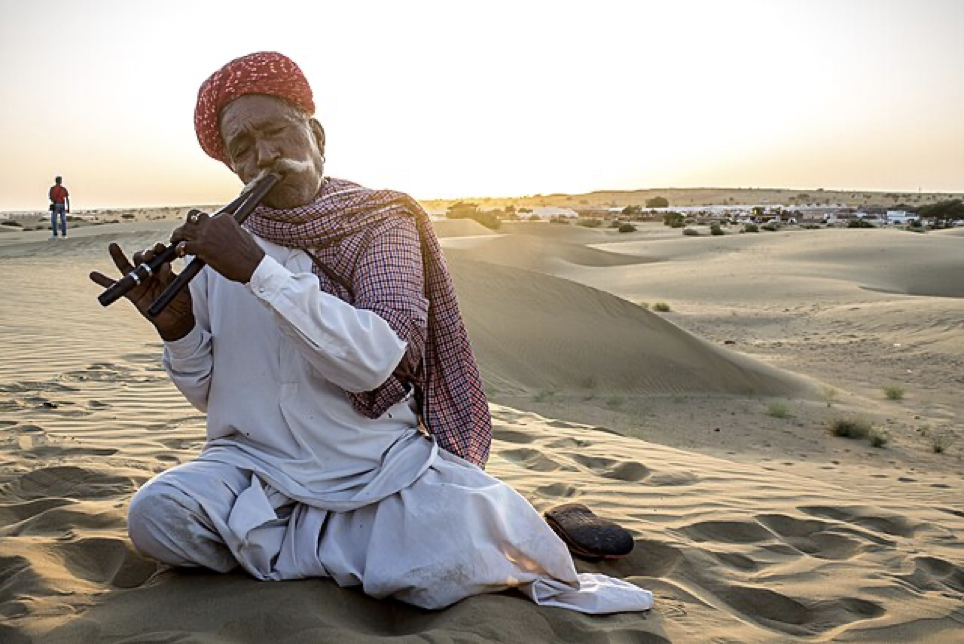
Entwined with memories of deep-seated pain and generational trauma, folk songs are also often acts of resistance, particularly in the social memory of historically oppressed communities.
“…acts of resistance, particularly in the social memory of historically oppressed communities…”
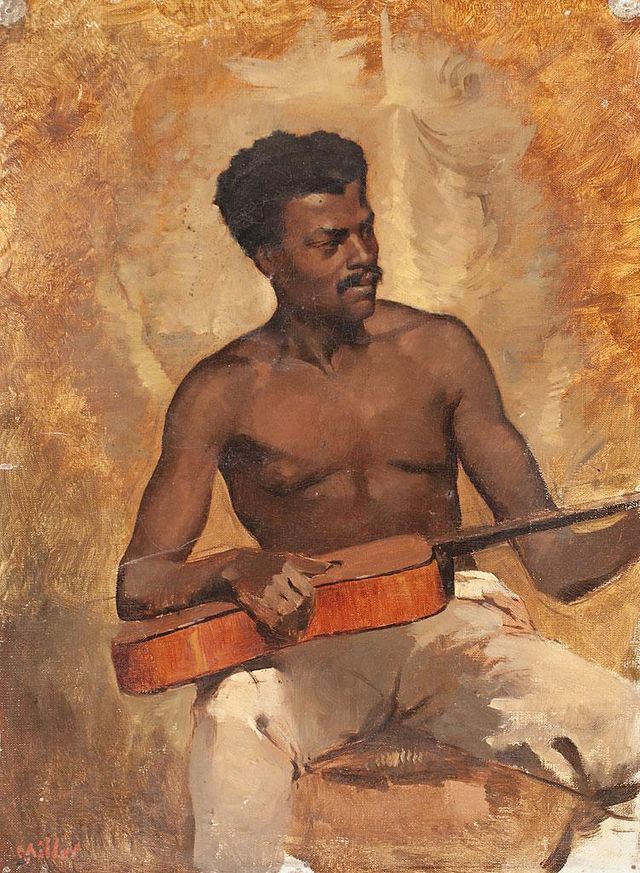
Rich in metaphor and layered meaning, African American folk music laid the groundwork for the emergence of musical traditions like gospel, blues, jazz, and later, rock and hip-hop.
Folk music traditions thus carve out empowering routes of circulation with the passage of time.


Folk Music, Labour History & the Tamil Diaspora
“Enjoy Enjaami,” the Indie hit single, which released in 2021, foregrounds the ancient Tamil folk tradition of oppari – lamentation – to tell the story of Sri Lankan Tamil plantation labourers.
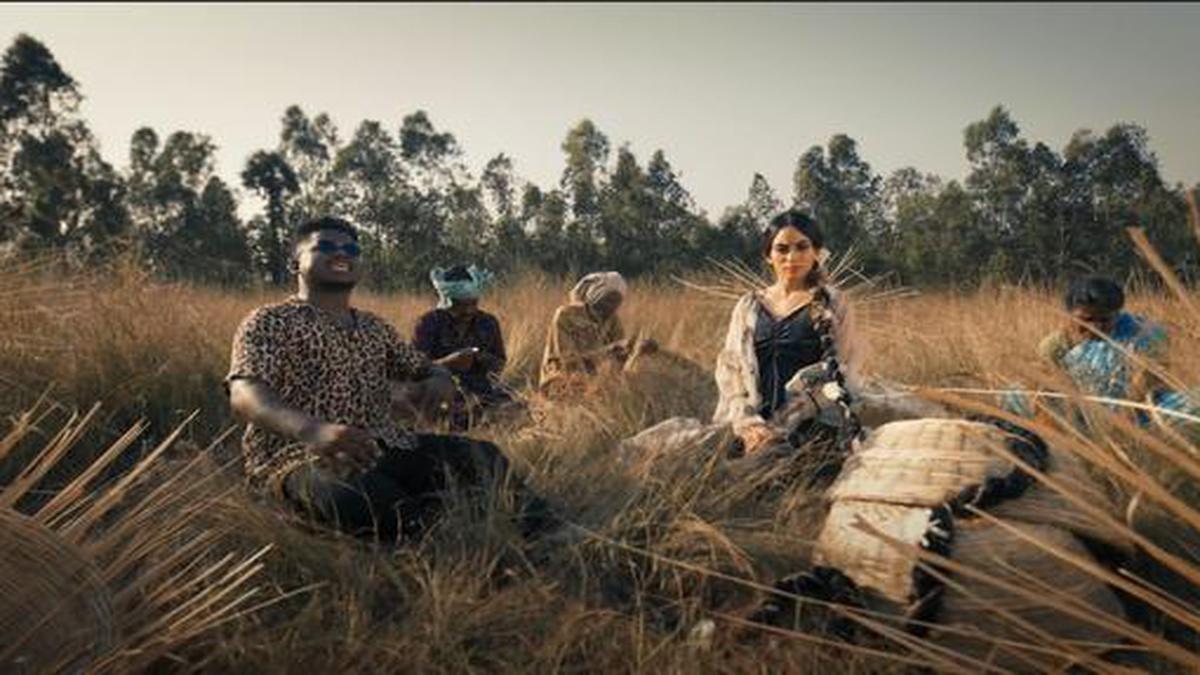
Through its haunting lyrics, sobs, chants, and equally poignant visuals, the song takes the viewer on a journey through Arivu’s grandmother, Valliammal’s memories of indentured labour in Sri Lanka.
Chronicling the people’s tender attachment to the land and sheer grit when confronted with brutally oppressive conditions, “Enjoy Enjaami” blends together Afro-Caribbean, hip-hop, and R&B elements to portray a universal emotion: hope.
Tamil folk song for a contemporary, global audience — pulsating with raw emotional intensity.
It is a Tamil folk song for a contemporary, global audience — pulsating with raw emotional intensity.
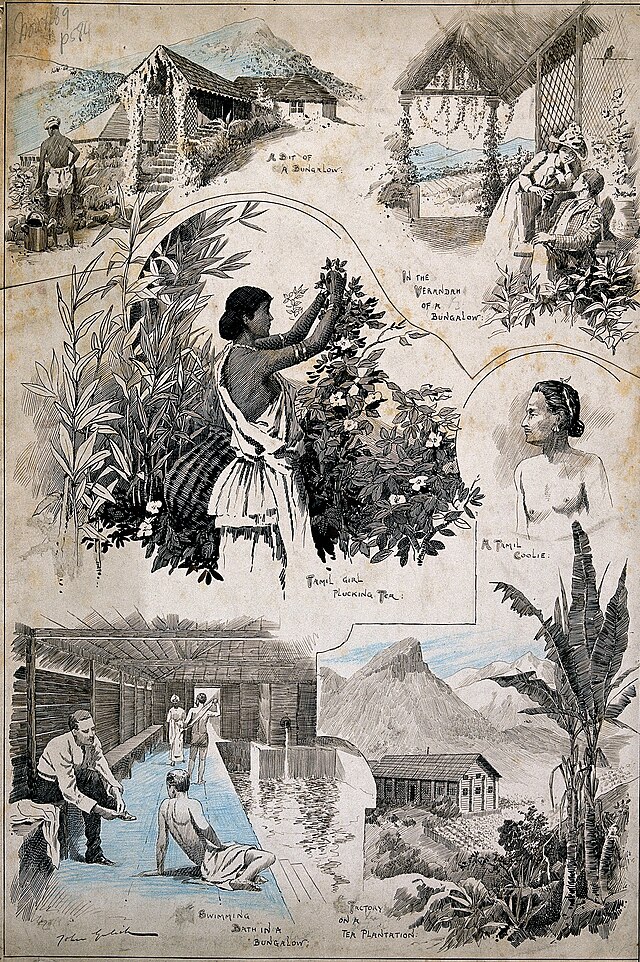
“Coolies’ Chorus” – Memories of Tamil Indentured Labourers in Malaysia, in their Own Voices
Today, it is laudable that efforts are underway to recover songs from the plantation frontier as proud counter-histories in Tamil diasporic contexts.
“…living archives that speak life and power to a dehumanising past, plantation songs preserve for posterity, resilience…”
Living archives that speak life and power to a dehumanising past, plantation songs preserve for posterity, the resilience of the people who transformed the landscapes of Sri Lanka and Malaysia with their labour.
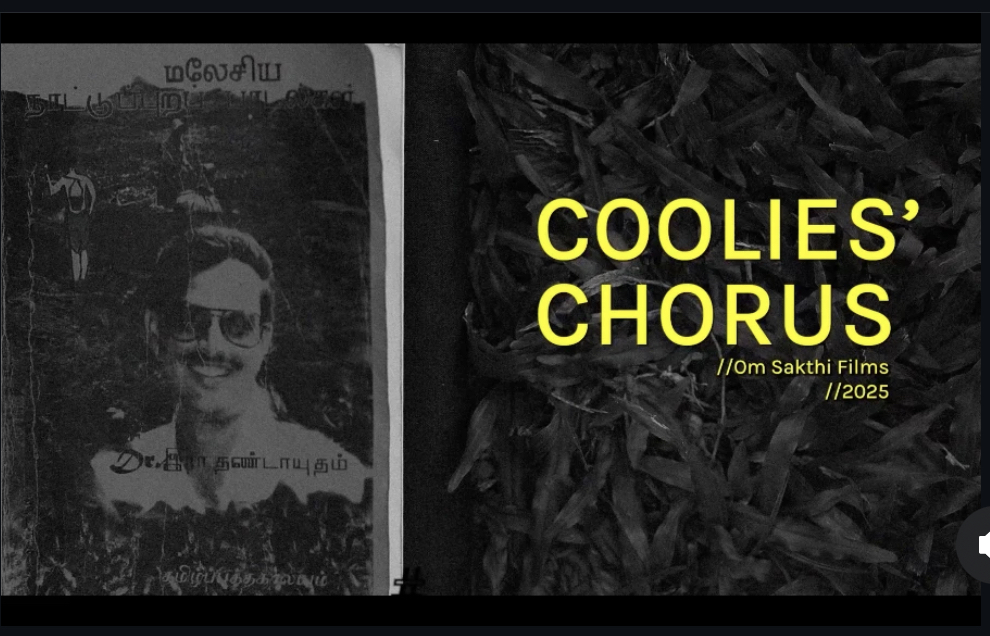
In this regard, it is noteworthy that a very important music archive project – the “Coolies Chorus” – is currently being featured in ILHAM Gallery, Kuala Lumpur, Malaysia.
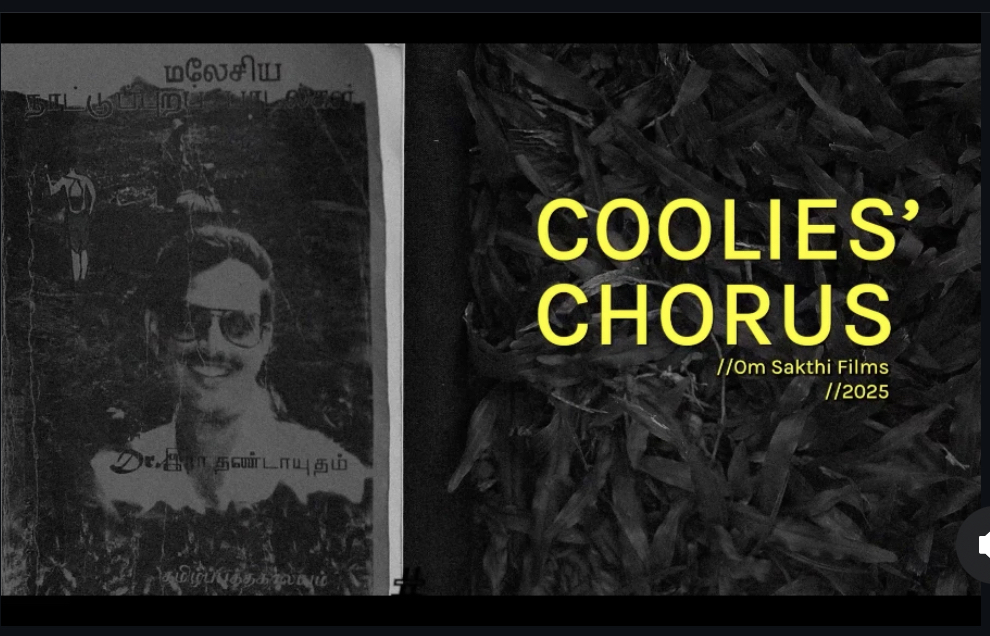
Source: Courtesy, Plantation.life
The project showcases songs that once reverberated through Malaysian plantations.
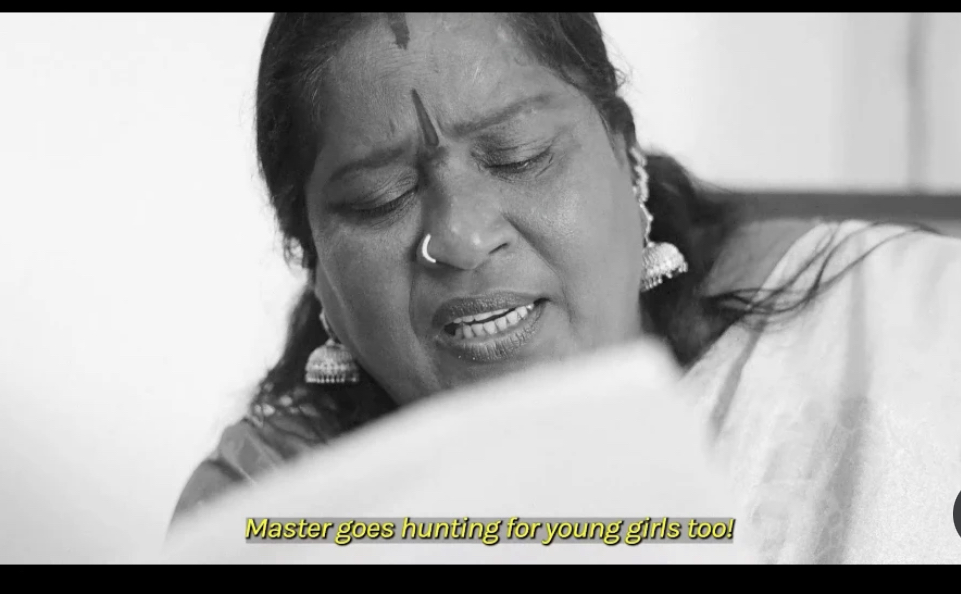
The songs featured in the exhibition have been reimagined and performed from lyrics recovered from oral histories.
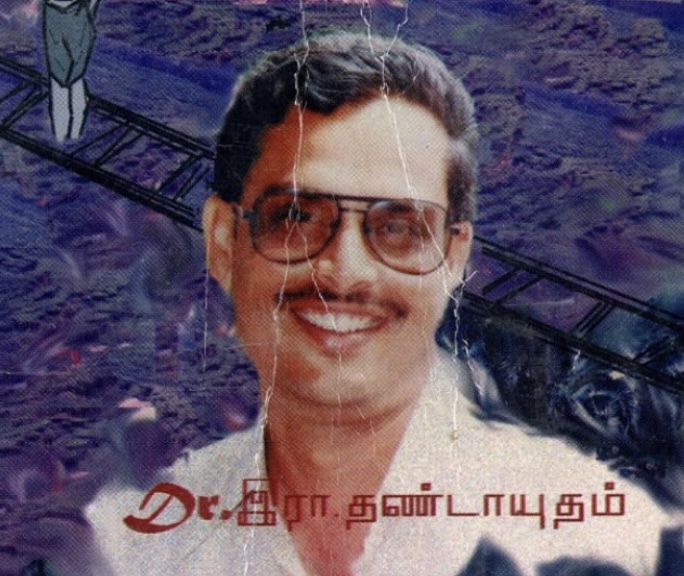
Until 21 September, visitors to the gallery can experience the songs left behind by indentured Tamil workers — songs that moved work along, eased the brutality of their living conditions, and fostered a sense of community for those who hummed them.
“…many more such initiatives are needed to honour the pioneers of the plantation frontier…”
Many more such initiatives are needed to honour the pioneers of the plantation frontier, for that’s who they are: pioneers.
Heartiest congratulations to Gogularaajan and team for taking the lead in honouring their labour, struggles, and legacy.
Folk Music & the Diaspora: A Rich Intellectual Heritage
Each folk music tradition originating from India has a set of musical instruments associated with it – like the parai drum and its place in oppari, a Tamil tradition associated with funerals.

Each also carries within it the caste, gender, and regional particularities rooted in the cultural geography it comes from, although these traditions equally allow for versatility in interpretation and application.

They are traditions that don’t just move people. Rather, they are traditions that have moved with people, holding space for human emotion across changing landscapes.
“… traditions that have moved with people, holding space for human emotion across changing landscapes.”
Folk music traditions in the diaspora reflect the complexities of living in diaspora — a state of arriving without ever fully leaving.
This is also why the coordinators of “Coolies Chorus” could turn to musicologists and folk singers in Tamil Nadu to reimagine the songs. Continuity in and through music allows for a reimagining of the tunes that the recovered lyrics would likely have been sung to in the past.
Music is a living heritage with distinct historical trajectories and networks of circulation, forging continuities across both time and space.
“…diaspora — a state of arriving without ever fully leaving.”
As dynamic living archives – and not just the distillation of their lyrics – the songs show the versatility of deep-rooted folk devices like oppari, nayanadi (satire), or haasyam (comedy).
They contain within them ways of seeing life, as well as the lingering echoes of transnational succour and solidarity, forming as much part of the diaspora’s intellectual inheritance, as its cultural heritage.
“…folk songs form as much part of the diaspora’s intellectual inheritance, as its cultural heritage.”
We would do well to historicise the folk music traditions of the South Asian diaspora as part of broader transnational knowledge networks; networks that open a window, not just onto the homes these communities worked and lived in, but also the homes that live on in their shared music-memory.
References:
Kannan M. Time Will Write a Song for You: Contemporary Writing in Tamil from Sri Lanka (New Delhi: Penguin, 2014).
Kingston Pal Thamburaj, “Historical background of Malaysian Tamil folk songs,” The Journal of Archaeology, Consciousness and Culture Volume 15,Issue 1(2022), pp. 41-66.
Vijaya Ramaswamy, “Women and Farm Work in Tamil Folk Songs,” Social Scientist Vol. 21, No. 9/11 (1993), pp. 113-129.
____________. The Song of the Loom: Weaver Folk Traditions in South India (New Delhi: Primus Books, 2013).
Links:
 Darinee Alagirisamy


Leave a comment